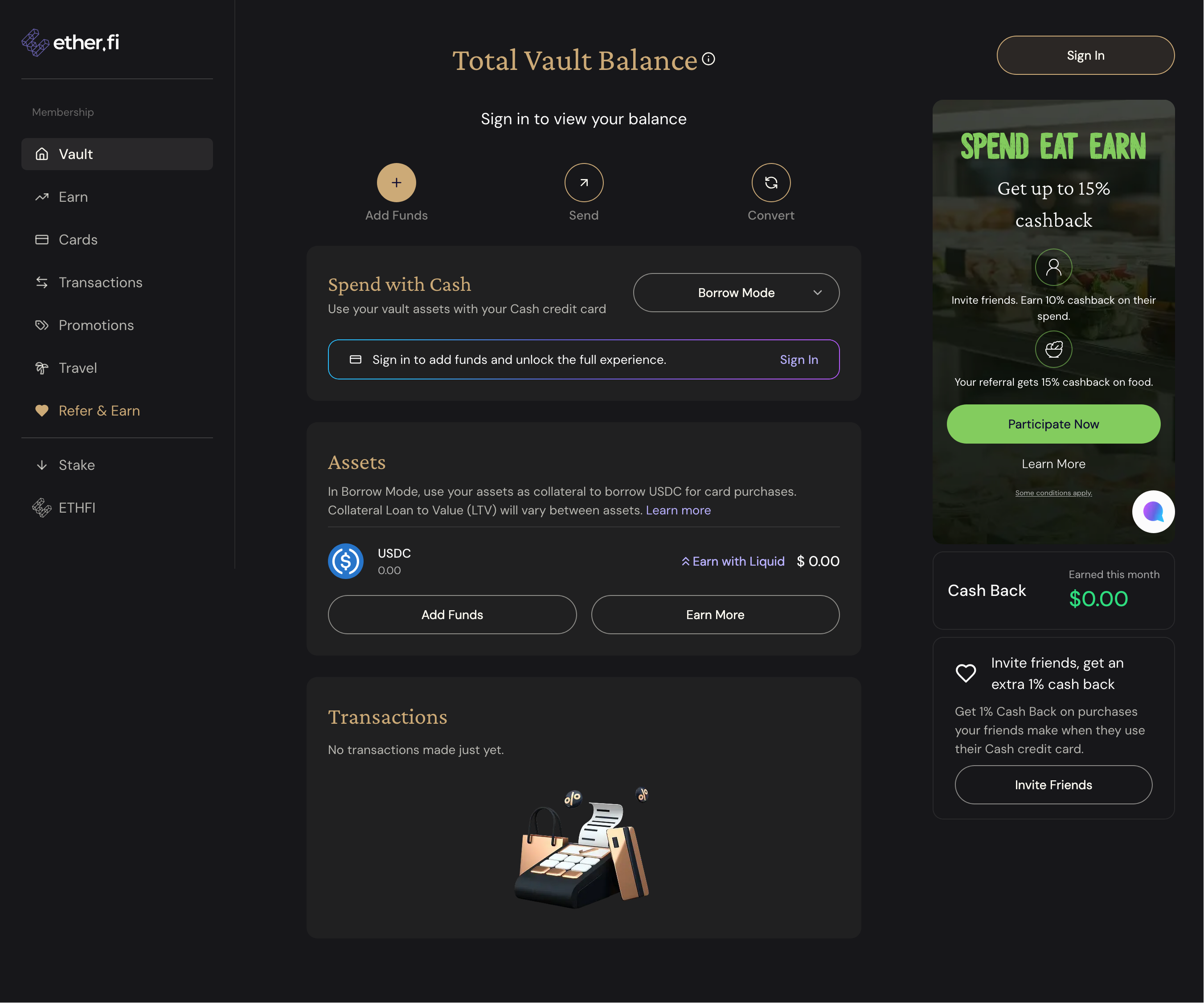
Ether.fi : Redefining Ethereum Staking, Restaking, and On-Chain Finance
As Ethereum continues to mature as the settlement layer for decentralized finance, the question of how capital is staked, secured, and reused has become increasingly important. Ether.fi has emerged as a pioneering protocol addressing this challenge by combining non-custodial staking, liquid staking, and restaking into a single, composable ecosystem. In doing so, it is helping shape the future of capital efficiency and security on Ethereum.
The Problem with Traditional Staking
Ethereum staking, while essential for network security, comes with several drawbacks:
Capital Lock-Up – Staked ETH is traditionally illiquid, preventing users from deploying capital elsewhere.
Custodial Risk – Many staking providers take custody of user funds or validator keys.
Single Yield Stream – Conventional staking only generates base protocol rewards, leaving capital underutilized.
Ether.fi was designed specifically to solve these limitations without compromising decentralization.
Non-Custodial Architecture: A Core Innovation
One of Ether.fi’s most distinguishing features is its non-custodial staking model. Unlike many liquid staking protocols, Ether.fi allows users to retain ownership of their validator withdrawal credentials, ensuring that staked ETH cannot be rehypothecated or seized by an intermediary.
This architecture aligns closely with Ethereum’s ethos of trust minimization and censorship resistance. Validators are operated in a way that separates:
Execution responsibility (node operation)
Economic ownership (user funds and withdrawals)
By doing so, Ether.fi reduces systemic risk and encourages broader participation from users who may otherwise be hesitant to stake through centralized providers.
Liquid Staking with eETH
When users stake ETH through Ether.fi, they receive eETH, a liquid staking token that represents:
The underlying staked ETH
Accrued staking rewards
Additional restaking rewards (where applicable)
Why eETH Matters
eETH transforms staked ETH from a passive asset into an active one:
It can be traded on decentralized exchanges
Used as collateral in lending protocols
Integrated into yield strategies and vaults
Held as a yield-bearing asset without sacrificing liquidity
This composability allows ETH to remain productive across DeFi while still contributing to Ethereum’s security.
Restaking and EigenLayer Integration
Ether.fi is one of the most prominent protocols leveraging EigenLayer, a system that enables restaking — the reuse of staked ETH to secure additional networks, middleware, and services known as Actively Validated Services (AVSs).
What Restaking Unlocks
Restaking introduces an entirely new economic layer to Ethereum:
Staked ETH can earn multiple reward streams
New decentralized services can bootstrap security without launching new tokens
Ethereum’s economic security becomes programmable and extensible
Ether.fi abstracts much of this complexity for users by automatically restaking eligible ETH, allowing them to benefit from EigenLayer without managing technical risk directly.
Yield Stacking and Ether.fi Vaults
Beyond staking and restaking, Ether.fi has expanded into automated DeFi strategies through products such as Liquid Vaults. These vaults deploy eETH and related assets across curated strategies to maximize risk-adjusted returns.
Potential yield layers include:
Base Ethereum staking rewards
EigenLayer restaking rewards
AVS incentive rewards
DeFi protocol incentives
Trading fees and lending interest
This concept of yield stacking is central to Ether.fi’s long-term vision: turning ETH into a fully optimized, multi-utility asset.
ETHFI Token and Governance
Ether.fi is governed by its native token, ETHFI, which plays a crucial role in decentralizing decision-making across the protocol.
Key Functions of ETHFI
Protocol Governance – Voting on upgrades, parameters, and treasury usage
Ecosystem Incentives – Rewarding node operators, users, and contributors
Alignment Mechanism – Ensuring long-term incentives between users and developers
Rather than focusing solely on speculative value, ETHFI is designed to support sustainable protocol growth and community ownership.
Real-World Financial Integration
Ether.fi is not limiting itself to on-chain primitives. With products like the Ether.fi Cash Card, the protocol is bridging decentralized finance with real-world usability.
This expansion allows users to:
Spend crypto directly
Borrow against staked assets
Earn rewards and cashback
Maintain exposure to ETH while accessing liquidity
Such tools signal Ether.fi’s ambition to become a full-stack crypto-native financial platform, not just a staking service.
Security, Risk, and Transparency
While Ether.fi unlocks powerful new opportunities, it also acknowledges the risks associated with restaking and DeFi composability.
Key risk considerations include:
Smart contract vulnerabilities
Slashing risks from validator misbehavior
Restaking complexity and AVS risk profiles
To mitigate these risks, Ether.fi emphasizes:
Independent security audits
Transparent documentation
Gradual onboarding of new AVSs
Conservative strategy design for vault products
This risk-aware approach is essential as Ethereum’s financial layer becomes more sophisticated.
Ether.fi’s Role in Ethereum’s Future
Ether.fi sits at the convergence of several defining trends:
The rise of liquid staking dominance
The emergence of restaking as shared security
The push toward capital efficiency in DeFi
The blending of on-chain and off-chain finance
As Ethereum evolves into a global settlement and security layer, protocols like Ether.fi will play a critical role in determining how value flows, how security is shared, and how users interact with decentralized systems.
Conclusion
Ether.fi is more than a staking protocol — it is an infrastructure layer for the next generation of Ethereum finance. By combining non-custodial design, liquid staking, restaking, and real-world financial tools, Ether.fi demonstrates how staked ETH can evolve from a locked asset into a dynamic, yield-generating cornerstone of the crypto economy.

AI Website Software